
01
Where your crates go missing.
Most crates are not stolen. They go missing in four ordinary moments, and each one looks harmless on the day.
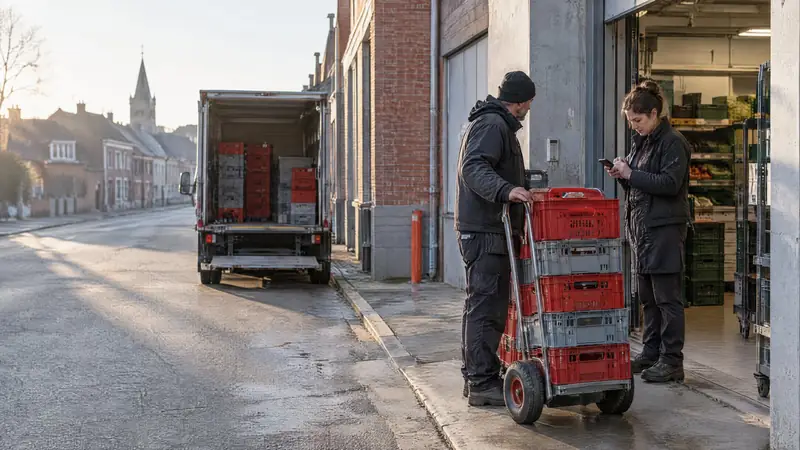
- 1At dispatch
The count on the CMR is a guess.
The driver writes 120 because the order says 120. Nobody counts at 06:00, so the first error is on paper before the truck leaves.
CMR: 120, not counted - 2At the customer
Your crates become their stock.
Empties sit on their site for weeks, get used for their own shipments or leave with another supplier.
Day 9: 46 still on site - 3At pickup
The driver takes what is ready, not what is owed.
74 come back from a drop of 120. Writing down the gap is nobody's job, so it leaves the record the same day.
Collected 74 of 120 - 4At month end
The balance is your word against theirs.
Your spreadsheet says 46. Their answer is that everything went back. Without proof per handover you write it off and order new crates.
Written off: 46 crates
Tracking closes each of these moments with one scan at the handover: who handed over, who received and how many.
02
Four ways to track returnable packaging.
Most companies combine two: a low-cost label on every item, and a live tracker on the few assets where position matters.
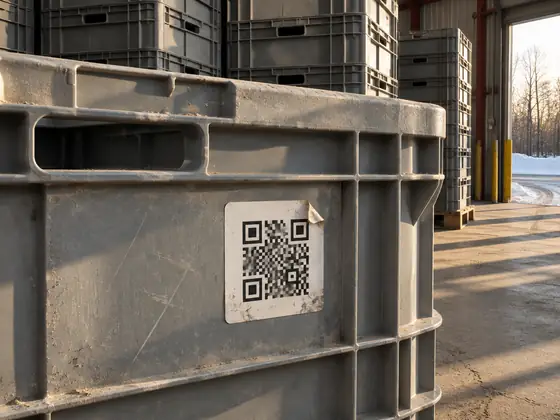
Barcode or QR label
Cost per item: lowest- What it tells you
- Where it was last scanned, and by whom
- What you need
- Phones or scanners at each handover
- Best for
- Exchanges and balances between partners
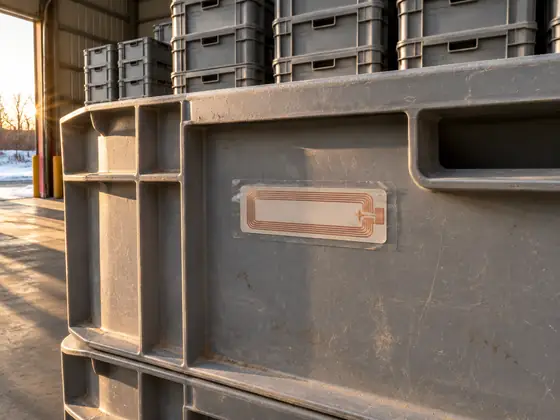
RFID tag (UHF)
Cost per item: low per tag, readers cost more- What it tells you
- That it passed a dock door or gate, with no manual scan
- What you need
- Readers at doors and gates
- Best for
- High volumes through fixed dock doors
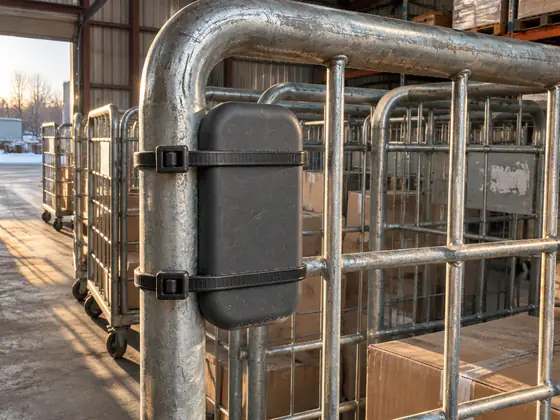
Bluetooth tag (BLE)
Cost per item: medium- What it tells you
- Which site or zone it is in now
- What you need
- Phones or gateways nearby
- Best for
- Pools and yards that need presence, not only handovers
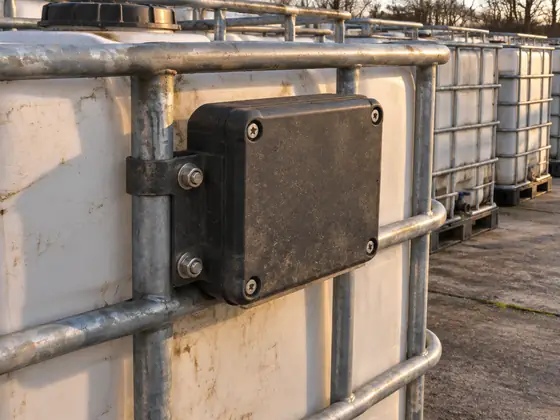
GPS or LTE tracker
Cost per item: highest- What it tells you
- Its position anywhere, live
- What you need
- Nothing on site, a battery to charge
- Best for
- High-value loads, theft and dwell time
Costs are relative. Ask every vendor for the full cost per item, readers and gateways included, not only the tag.
03
What good returnable packaging software does.
Use this list to compare vendors. Each line is something a buyer can test in a demo.
 BalancesHandovers4PartnersLiveOut at partners58
- PartnerOutBackOwed
- Market Lier1207446
- Depot Gent604812
- Vos Transport40400
Market Lier still holds 46 crates after today's return.
9 days above the agreed balance- 01Keeps a balance per partner.Who holds how many of your crates, roll cages and pallets today, without a spreadsheet.
- 02Records proof at every handover.A scan, a count and a signature or photo, so a dispute takes minutes.
- 03Works for partners without an IT project.Carriers and customers confirm on their own phone.
- 04Settles deposits and rental.Statements that partners accept or dispute in one place.
- 05Connects to your ERP.Packaging movements next to orders and invoices in SAP or Microsoft Dynamics.
- 06Reports reuse for PPWR.Trips per item and reuse rates, ready for the EU packaging rules.
04 Rotion
Written by Rotion.
Rotion is software for reusable packaging: pallets, crates, IBCs and roll cages. It does everything on the checklist above. We wrote this guide to be useful whichever tool you choose.
05
Questions buyers ask.
What is returnable packaging tracking?
It is the record of where each reusable crate, roll cage, pallet or IBC is and who holds it. Every handover between companies is scanned or counted, and the software adds the handovers up into a balance per partner.
How do you track returnable packaging between companies?
Record every handover: who handed over, who received and how many. A scan on a phone is enough for most packaging. Tags such as RFID or Bluetooth remove the manual scan where volumes are high.
Do I need a tag on every crate?
No. Many loops start by counting per type at each handover, which already gives a balance per partner. A QR label or tag on each item adds trips per item, age and where a single item was last seen.
How much returnable packaging gets lost?
It differs per loop, so measure your own: compare what you bought to replace missing items last year with what is in circulation. The calculator on this site turns that into a yearly cost.
